Choosing the AMD Ryzen 7 7800X3D for a desktop build starts with a practical question: do its listed specifications fit the system you are planning, and does the exact listing make sense for your budget? The processor is specified with eight cores, 16 concurrent threads, an AM5 socket, and 8 MB L2 plus 96 MB L3 cache. Those details give you a concrete checklist without needing to rely on a sale headline. During Black Friday, compare the exact processor and offer shown on the listing, then consider the rest of your build before deciding.
The AMD Ryzen 7 7800X3D is a desktop processor with a listed speed of 4.2 GHz, eight cores, and 16 concurrent threads. Its socket specification is Socket AM5, so the motherboard selection is an essential early check: confirm that the board you intend to use is identified for that socket rather than assuming a processor will fit because it shares a brand or product family. The listing also gives 8 MB L2 plus 96 MB L3 cache, a 5 nm process technology, graphics frequency of 2200 MHz, and a maximum operating temperature (Tjmax) of 89°C.
This is a useful choice to investigate if those specific figures align with your build plan; they are not a substitute for checking the rest of the parts and the exact listing. For Black Friday, treat this model’s name and socket as identifiers to verify before comparing offers. The supplied information does not establish a sale price, a performance result, or whether a particular configuration suits every workload. Its Best for AM5 build planning label reflects the clearly specified Socket AM5, not a claim of measured superiority.
Make motherboard selection the first compatibility checkpoint
The listed Socket AM5 is the most direct starting point when you are deciding whether this processor belongs on your parts list. Before getting drawn into Black Friday offer comparisons, identify the motherboard you plan to use and check its stated socket against the processor listing. If you have not selected a board yet, use the socket as a filter while researching possible options, then verify the exact board and processor details together before purchasing. This avoids treating a broad platform name as a sufficient fit check.
Keep the check narrow and evidence-based: the supplied processor details confirm Socket AM5, but they do not identify a particular motherboard or establish compatibility with every board. If a listing or parts plan leaves that point unclear, pause to confirm it rather than inferring an answer from a product title. During Black Friday, where several listings may appear in a short search, matching the exact model and socket is more useful than comparing headline wording alone. Keep the listing you are considering open while checking your planned motherboard.
Use the core and thread figures to describe your workload
Eight cores and 16 concurrent threads are clear planning details, but they do not tell you on their own how a processor will behave in a particular program. Start by writing down what you expect the desktop to do: for example, which applications matter most and whether your routine involves one demanding task or several tasks at once. Then compare those needs with the specifications you can verify for each candidate. The figures here describe the processor; they are not a promise about results in a named game, application, or creative workflow.
This distinction is especially helpful when Black Friday browsing makes a short specification list feel like a complete buying answer. Use the core and thread counts to organize your shortlist, not to assume a performance advantage over another processor whose details are not provided here. If a specific application is central to your decision, look for relevant requirements and reliable information for that application before purchasing. The practical decision is whether the listed configuration meets your own selection criteria, not whether a single number sounds impressive.
Interpret the speed and graphics entries as listing details
The product information lists a processor speed of 4.2 GHz and a graphics frequency of 2200 MHz. Keep these as two separate specifications when comparing processor listings: the source presents them under different labels. Neither number alone describes how a complete desktop will perform, and the graphics-frequency entry does not provide enough information to determine what display setup or graphics workload is appropriate. Avoid turning either figure into a claim about results that the listing does not establish.
For a Black Friday comparison, check that the listing you are evaluating is for the Ryzen 7 7800X3D and that its specification details match the product you intended to consider. If graphics capability is important to your build, seek information that directly answers your requirements instead of treating a frequency figure as a complete description. Likewise, use 4.2 GHz as a listed processor specification, not as a standalone comparison with products whose full specifications and conditions are unknown. This keeps your decision tied to verifiable details.
Put the cache figures beside your actual use case
The listed cache is 8 MB L2 plus 96 MB L3. Those figures can help distinguish this processor in your comparison worksheet, but the supplied details do not explain how a particular application will benefit from them. If you have a set of programs in mind, note them alongside the cache specification and look for information relevant to those programs. This gives the figure context without assuming that a larger or differently described cache automatically settles the purchase decision.
During Black Friday, keep this check separate from the offer itself. First confirm that you are comparing the intended processor and its stated cache details; then assess whether the price and other listing terms work for your budget. A temporary-looking headline cannot tell you whether this specification fits your needs, and the cache numbers cannot tell you whether an offer is worthwhile. A short worksheet with model, socket, cache, and intended applications makes it easier to compare the same criteria across listings without relying on memory.
Plan around the stated temperature and process information
The specification lists a maximum operating temperature (Tjmax) of 89°C and 5 nm process technology. Treat both as technical reference points, not as complete instructions for choosing a cooler, case, or operating setup. No cooler recommendation or system configuration is supplied here, so do not infer one from these entries alone. If your build decisions depend on thermal planning, check the requirements and guidance relevant to the full system before finalizing its parts.
This is also a useful moment to slow down during Black Friday shopping. Verify the exact processor listing, note the two specifications accurately, and investigate any system-planning question that remains unresolved. The process description is not, by itself, a guarantee about power use or temperatures in your own computer. Similarly, the listed Tjmax is not a promise that every build will operate at that temperature. Keeping those limits clear helps prevent a single specification from standing in for missing information.
Key specs
Socket
Processor Socket Socket AM5
Processor speed
Processor Speed 4.2 GHz
Core count
Processor Core Count 8
Concurrent threads
Processor Number of Concurrent Threads 16
Graphics frequency
Graphics Frequency : 2200 MHZ.
Maximum operating temperature
Maximum Operating Temperature (Tjmax) : 89°C.
Cache
8 MB L2 plus 96 MB L3 cache memory
Process technology
5 nm process technology
Make your Black Friday choice
A sensible decision worksheet for the Ryzen 7 7800X3D starts with the Socket AM5 check, then records its eight cores, 16 concurrent threads, 4.2 GHz listed speed, cache figures, graphics frequency, Tjmax, and process technology beside your intended system requirements. During Black Friday, compare only the exact model and offer you have verified, and do not assume a promotion is active or that a headline establishes value. Confirm any unanswered build questions before checkout. If the verified specifications suit your plan and the listing fits your budget, you can make the choice with clearer expectations.
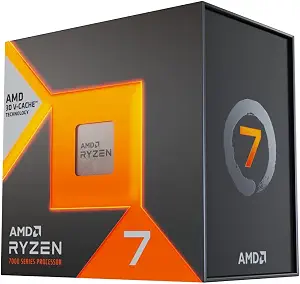 Check Price on Amazon