Best Intel Cpu Buying Guide — Black Friday Deals 2026
Choosing an Intel CPU for a Black Friday build starts with the parts and tasks you actually have in mind, not a headline offer. This shortlist covers three different decision paths: a processor that calls for discrete graphics, a Core i7 with integrated graphics, and a Core Ultra option with DDR5 support and an integrated AI accelerator. Those features make useful comparison points, but they do not establish which model will suit every workload or budget. Before checkout, match the processor to your motherboard, memory plans, graphics setup, and intended use. Then compare the exact Black Friday listing and variant rather than assuming a promotion makes a particular choice right for you.
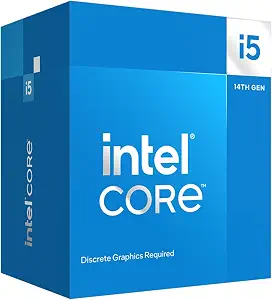
The Intel Core i5-14400F is the Best Budget pick in this shortlist for shoppers who want a defined set of desktop features and are building around a discrete graphics card. Its 10 cores combine 6 P-cores and 4 E-cores, with 16 threads, and its maximum frequency is up to 4.7 GHz. Those details help identify the processor’s configuration; they are not a promise of how a particular game or application will perform. If you are comparing Black Friday options, consider whether this mix fits your planned build rather than treating the model name or offer headline as a performance verdict.
Plan for a separate graphics solution: discrete graphics are required. That makes the i5-14400F a conditional fit for someone who already has a graphics card or has included one in the complete build plan. The supplied facts also list an RM1 thermal solution, PCIe 5.0 and 4.0 support, and 20MB Cache. These points can help you check the product against your own component and feature priorities, but they do not answer every question about a particular system. Review the exact listing and your other parts before deciding.
Motherboard and memory choices deserve attention before a Black Friday purchase. The processor is compatible with Intel 600-series motherboards, with a potential BIOS update, and 700-series chipset-based motherboards. It supports DDR4 and DDR5 memory, so verify which memory type your chosen board is designed to use rather than assuming the processor makes unlike parts interchangeable. The Best Budget label is an editorial choice among the products here, not a claim about a current discount or a market-wide winner. Choose it when discrete graphics suit your plan and its listed platform support aligns with your build.
Key specs
Cores and threads
10 cores (6 P-cores plus 4 E-cores) and 16 threads
Maximum frequency
Up to 4.7 GHz
Cache
20MB Cache
Motherboard compatibility
Compatible with Intel 600-series (with potential BIOS update) and 700-series chipset-based motherboards
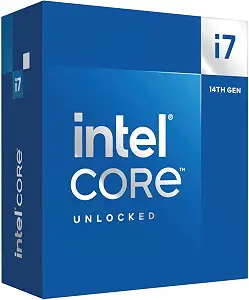
The Intel Core i7-14700K is the Best Overall choice among these three for shoppers whose plans make its listed core configuration and integrated graphics relevant. It has 20 cores—8 P-cores and 12 E-cores—and 28 threads. Its maximum frequency is up to 5.6 GHz with Turbo Boost Max Technology 3.0. These specifications give you concrete details to weigh alongside your intended applications, but they do not establish a measured advantage for every task. During Black Friday shopping, compare the exact processor listing with the rest of your build instead of relying on a broad “overall” claim.
Integrated Intel UHD Graphics 770 is included, which may be useful if your build plan calls for integrated graphics. Treat that as a stated feature, not an assumption that it will meet every graphics need: decide what you expect your system to do and whether the included graphics fit that purpose. The processor also supports DDR4 and DDR5 platform memory. That flexibility can be relevant when comparing platform plans, but your motherboard determines the memory type supported by the particular board. Check the board and memory details together before treating an offer as a ready-made match.
For compatibility planning, the i7-14700K is listed for Intel 600-series motherboards, with a potential BIOS update, or 700-series chipset-based motherboards. Confirm the board’s requirements for your intended configuration before ordering, especially if you are reusing components. The Best Overall label is an editorial choice limited to this shortlist; it does not mean the processor is the best fit for every shopper or prove a test result. It is a reasonable candidate to investigate when the listed core layout, integrated graphics, and memory support match your priorities. On Black Friday, make the final call using the exact model and board combination.
Key specs
Cores
20 cores (8 P-cores plus 12 E-cores)
Threads
28 threads
Integrated graphics
Integrated Intel UHD Graphics 770 included
Maximum frequency
Up to 5.6 GHz with Turbo Boost Max Technology 3.0
Motherboard compatibility
Compatible with Intel 600-series (with potential BIOS update) or 700-series chipset-based motherboards
Memory support
DDR4 and DDR5 platform support
Intel Core Ultra 9 Desktop Processor 285K
Best for a DDR5-focused build with an integrated AI acceleratorCheck Price on Amazon
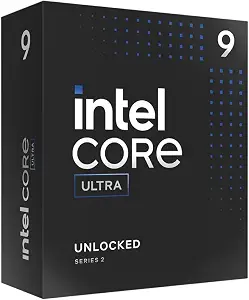
The Intel Core Ultra 9 Desktop Processor 285K is the Best for a DDR5-focused build with an integrated AI accelerator. That label reflects two listed features, not a claim that it will be ideal for every system or AI task. Its 24 Processing Units are described as 8 Performance plus 16 Efficient, and its max turbo frequency is up to 5.7 GHz. Use those details to decide whether this processor belongs on your Black Friday shortlist, while keeping workload results and value comparisons separate from specifications that are provided here.
This is an unlocked desktop processor with LGA 1851 socket, supports DDR5 memory, and includes integrated graphics. Intel AI Boost NPU is integrated as well. Together, those facts may matter to someone planning a DDR5 platform and specifically seeking a processor with an integrated AI accelerator. They do not establish what applications will use the accelerator, how a given task will run, or which other components are required for a particular setup. Check the exact listing and plan around the features that matter to your own use rather than inferring capabilities beyond those stated.
Socket and memory planning are especially important when comparing the 285K with the other processors in this guide. The listed LGA 1851 socket is a concrete compatibility checkpoint; do not assume a motherboard intended for a different socket will fit. Likewise, plan for DDR5 memory rather than treating the other models’ DDR4 support as evidence of compatibility with this processor. Before committing during Black Friday, identify the matching board and memory for your intended build and compare the exact offer. The product’s integrated graphics and AI accelerator are useful decision points only if they align with your requirements.
Key specs
Processing units
24 Processing Units (8 Performance + 16 Efficient)
Max turbo frequency
Up to 5.7 GHz max turbo frequency
Processor socket
LGA 1851
Memory support
Supports DDR5 memory
Integrated graphics
Integrated graphics included
AI accelerator
Intel AI Boost NPU integrated
Processor status
Unlocked desktop processor
Start with the system you intend to assemble
A processor purchase is easier to evaluate when you first write down what the complete computer needs to do. Separate must-haves from preferences: whether your plan includes a discrete graphics card, which memory type you expect to use, and whether an integrated AI accelerator is a priority. This helps keep Black Friday browsing focused on a few relevant configurations instead of turning every advertised processor into a candidate. The i5-14400F requires discrete graphics, while the i7-14700K and Core Ultra 9 285K list integrated graphics. That difference is a planning prompt, not a claim that integrated graphics will meet every use case.
Next, consider what you will carry over from an existing system, if anything. A processor that appears attractive in a Black Friday listing may still call for a different motherboard or memory plan than the one you already have. Record the exact board model and memory type you are considering, then check the processor’s listed compatibility facts. If you are starting fresh, decide which platform details matter before comparing offers. This simple order—needs, platform, then listing—can help you avoid choosing from a price headline before confirming that the configuration makes sense for your build.
Treat the motherboard as a required match
Motherboard compatibility is not a detail to leave until after choosing a processor. The i5-14400F and i7-14700K are each listed as compatible with Intel 600-series boards with a potential BIOS update, as well as 700-series chipset-based boards. The possibility of a BIOS update is a reason to verify the board’s requirements for the exact setup rather than assuming that a chipset-family match settles every question. When comparing a Black Friday offer, note the processor model and motherboard model together, particularly if you are planning to reuse a board.
The Core Ultra 9 285K has a different stated socket: LGA 1851. Use that as a direct checkpoint when identifying a suitable motherboard. The supplied facts do not provide a motherboard list for this processor, so check the exact board listing and compatibility information before buying. A careful match is more useful than guessing based on a familiar brand or a previous platform. If two processors remain on your shortlist, compare the platform each one requires against the boards you are actually willing to choose. That makes the decision specific to your system rather than a general claim about which processor is better.
Let graphics needs shape the shortlist
Graphics planning can quickly clarify which of these processors deserves a closer look. The Core i5-14400F requires discrete graphics, so include a separate graphics card in the plan before treating it as a complete build choice. The Core i7-14700K lists integrated Intel UHD Graphics 770, and the Core Ultra 9 285K lists integrated graphics. Those are useful distinctions when planning a system, but they do not tell you whether the graphics option will suit a particular game, creative application, display setup, or other task. Make that assessment from your actual requirements and the relevant component information.
During Black Friday, check whether the offer is for the exact processor you mean to buy; similar-looking model names can make a quick comparison confusing. Then consider the graphics configuration as part of the whole system, not as an isolated feature. If you intend to use a discrete card, decide which processor features still matter to you. If you are considering integrated graphics, make sure the stated feature fits your intended use rather than assuming it replaces every other graphics plan. This approach keeps the comparison grounded in what is provided without promising a particular experience.
Choose memory before judging a headline offer
Memory support is a practical way to narrow the options. The i5-14400F supports DDR4 and DDR5 memory, and the i7-14700K supports DDR4 and DDR5 platform memory. The Core Ultra 9 285K supports DDR5 memory. These facts can help you align a processor with the memory direction you have chosen, but the motherboard still needs to support the memory type in your planned configuration. Do not read support for two memory types as permission to mix them or as proof that a particular board accepts both; confirm the board’s specifications before ordering components.
For a Black Friday comparison, write down the processor, motherboard, and memory type for each build option. Then compare the exact listing against that plan. A tempting offer is less useful if you have not decided whether you are building around DDR4 or DDR5, or which board will support your intended combination. If you have existing memory, check whether it fits the board you plan to use rather than relying on processor support alone. If you are choosing all-new parts, decide which platform direction you prefer and use it consistently as you compare listings.
Compare the offer, not just the processor name
A Black Friday headline does not tell you whether an offer matches your needs. Confirm the full model name and exact variant, then check the included details that are stated for that product. For the i5-14400F, the provided facts include an RM1 thermal solution; the other product records here do not state an included thermal solution. That difference in the information available is not proof that an unmentioned item is or is not included. Read the exact listing for the configuration you are considering, and do not assume that an appealing product name settles what arrives with it.
Compare the processor’s listed features with your own checklist: graphics plan, motherboard, memory, and any specific feature that matters to your work. Avoid deciding from an offer label alone or assuming that a Black Friday promotion is active for every product or variant. Check the current listing details and decide whether the exact configuration is appropriate for you. If the necessary compatibility information is unclear, pause to verify it rather than treating a familiar model number as a substitute for checking. A disciplined comparison is useful even when the offer itself changes.
Make your Black Friday choice
The right Intel CPU here depends on the build you want to make: the i5-14400F requires discrete graphics, the i7-14700K lists integrated graphics and DDR4/DDR5 support, and the Core Ultra 9 285K brings DDR5 support and an integrated AI accelerator. Those are starting points for a practical comparison, not universal rankings. Before buying on Black Friday, verify the exact offer, motherboard match, memory plan, and graphics needs together. Choose the model whose stated features align with your priorities, and treat each editorial label as a shortlist cue rather than proof of a deal or measured result.