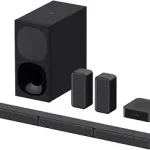
YAMAHA YHT-4970U 5.1-Channel Home Theater System (ASIN B0H2FRHKH5)
Best Home Theatre Buying Guide — Black Friday Deals 2026
A home theatre purchase is a choice about more than sound: it sets the shape of your room setup, the way you connect video and audio, and how much separate equipment you want to place. This guide compares three different approaches, from a component-based Klipsch and Onkyo package to Sony’s soundbar system and Yamaha’s receiver-based 5.1 setup. For Black Friday, treat each listing as a package to verify, not a promise of a discount. Compare the exact model and included components, then weigh the features against your room and everyday habits. The right pick is the one whose format and setup fit your space—not simply the one with the longest feature list.
Klipsch Reference 5.2 Home Theater System with Onkyo TX-NR7100
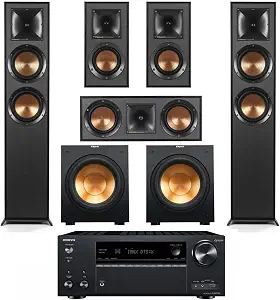
Klipsch Reference 5.2 Home Theater System with Onkyo TX-NR7100 (ASIN B0CZPCDN8Q)
Best Overall is the editorial pick for shoppers who want a substantial collection of separate speakers and an AV receiver in one listed package. The Klipsch Reference system includes two R-625FA floorstanding speakers, an R-52C center channel, a pair of R-41M bookshelf speakers, two R-12SW powered subwoofers, and an Onkyo TX-NR7100 receiver. That inventory gives you a concrete checklist before you buy: consider where each speaker and subwoofer could go, and whether you are prepared to arrange a multi-component setup. The label describes this package’s broad component lineup among the featured options; it is not a claim of measured superiority.
The receiver is a 9.2-channel network AV receiver, described as an 8K/4K network AV receiver, with specified power of 220W per channel at 6 ohms. Each included subwoofer has a 12-inch design and a specified 400W all-digital powered configuration. Those are useful details to review alongside the room and equipment you plan to use; they do not by themselves establish how the system will sound in a particular space. The speakers are finished in black wood grain vinyl, a finish detail worth considering if the system will be visible in your living room or dedicated viewing area.
This package makes sense to consider if you value having the speakers and receiver identified together rather than assembling a system from separately chosen components. Its tradeoff is also apparent in the component count: you will need to plan for several speaker positions and the receiver as part of your setup. Before a Black Friday purchase, match the listing’s exact package contents to your plan and confirm that the model names and quantities are the ones you intend to buy. Don’t let a headline offer substitute for checking what is actually included. If you have not decided where the separate pieces will sit, map those locations first; if the layout works, the detailed inventory makes this a clear candidate for a component-led home theatre.
Key specs
Included components
2 Klipsch R-625FA floorstanding speakers, an R-52C center channel, R-41M bookshelf speaker pair, 2 R-12SW powered subwoofers, and an Onkyo TX-NR7100 AV receiver
Subwoofer size and power
each featuring a 12-inch design and specified 400W all-digital powered configuration
Receiver channels
9.2-channel network AV receiver
Receiver power
220W per channel at 6 ohms
Receiver platform
8K/4K network AV receiver
Speaker finish
finished in black wood grain vinyl
Sony BRAVIA Theater System 6 5.1ch Soundbar with Subwoofer & Rear Speakers
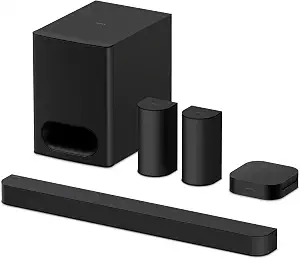
Sony BRAVIA Theater System 6 5.1ch Soundbar with Subwoofer & Rear Speakers (ASIN B0DYWTWN8R)
Best Budget is the editorial label for the Sony BRAVIA Theater System 6, a 5.1-channel soundbar package with a subwoofer and rear speakers. The listed surround arrangement comprises three front-firing speakers, two rear speakers, and an included wired subwoofer. A dedicated center channel speaker is specified for dialogue, and the system supports Dolby Atmos and DTS:X. This gives shoppers a straightforward way to compare a soundbar-based package with the separate-speaker Klipsch and Yamaha systems in this guide. The label is a guide to this selection, not a statement about price, savings, or market-wide value.
Think about how you use the room before choosing this format. The soundbar can be placed on a tabletop or wall mounted, and its listed dimensions are 3.6″D x 35.7″W x 2.6″H. Check that size and the mounting option against the space where you expect to put it. The rear speakers and wired subwoofer are part of the specified package, so include their placement in your plan rather than focusing only on the bar. Bluetooth supports wireless music streaming from a smartphone, which may be handy when the system is also used to play music.
For Black Friday, compare the exact Sony listing and package against your intended setup instead of assuming that a deal includes any accessories or components not named in the product details. The wired subwoofer is a practical point to account for when you decide where the pieces will sit. The system’s shape may appeal to someone who wants a soundbar as the front of the setup while still considering rear speakers and a subwoofer; it is not a one-piece bar-only package. If your priority is a clearly specified soundbar configuration with rear speakers, a dialogue-focused center channel, and the named audio formats, this is the relevant option to examine. Verify the listed model and included arrangement before making your final choice.
Key specs
Surround sound
3 front-firing speakers, two rear speakers, and included subwoofer (wired)
Audio formats
support for Dolby Atmos and DTS:X
Dialogue
dedicated center channel speaker
Bluetooth
wireless music streaming from your smartphone with Bluetooth technology
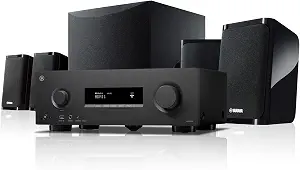
YAMAHA YHT-4970U 5.1-Channel Home Theater System (ASIN B0H2FRHKH5)
Best for Room-Optimized Setup is the editorial label for the YAMAHA YHT-4970U, based on its included setup microphone. The microphone measures room acoustics and speaker characteristics so the receiver can automatically optimize sound performance. That feature is especially relevant if you want setup guidance tied to the room rather than choosing a system solely by its format or video specifications. It is a listed capability, not a guarantee of a particular result in every space, so consider whether the included automatic setup process matches the kind of setup you want.
The system is a 5.1-channel configuration with two front channel speakers, a center channel speaker, two surround channel speakers, and a powered subwoofer. Its stated audio formats are Dolby Atmos and DTS Virtual:X. On the video side, it supports ultra-high definition 4K/120 and 8K/60, and it lists HDMI eARC/ARC. Built-in Bluetooth Multipoint lets you pair two source devices and switch between them. These details help narrow the choice if your shopping checklist includes video support, a defined speaker arrangement, and a receiver setup feature. Check each item against the devices and listening habits you intend to bring to the system.
The Yamaha’s separate speaker arrangement means that room layout still matters, even with the setup microphone included. Allow time to think through the positions for the front, center, surround, and subwoofer components, then consider how the microphone-based setup fits into your process. Around Black Friday, confirm that the exact YHT-4970U listing is the variant you mean to compare and that its stated package and features match your needs. The Best for Room-Optimized Setup label points to the microphone feature as a useful distinction among these picks; it does not claim that Yamaha is best for every room. Choose it if that setup approach is a priority, and compare its channel layout and connections with the rest of your shortlist.
Key specs
Audio formats
Dolby Atmos and DTS Virtual:X
Speaker configuration
two front channel speakers, a center channel speaker, two surround channel speakers, and a powered subwoofer
Video support
Supports ultra-high definition 4K/120 and 8K/60 video
HDMI features
HDMI eARC/ARC
Bluetooth
Built-in Bluetooth Multipoint lets you pair two source devices and instantly switch between them.
Room setup
An included setup microphone measures your room’s acoustics and speaker characteristics, allowing the receiver to automatically optimize sound performance.
Start with the room, not the product page
Before you compare feature lists, picture the system in the room where you will use it. A soundbar, rear speakers, floorstanding speakers, bookshelf speakers, a center channel, and a subwoofer each call for a different placement plan. The Sony listing gives a tabletop or wall-mount option for its soundbar, but its rear speakers and wired subwoofer also need to be considered. The Klipsch package names several separate speakers and two subwoofers, while the Yamaha package lists front, center, surround, and subwoofer components. Those inventories make it possible to sketch a realistic arrangement before you decide.
Measure or otherwise check the usable surfaces and locations in your room, paying attention to where the screen, seating, and walkways already are. For the Sony, compare the listed soundbar dimensions with the intended spot; also consider where its rear speakers and wired subwoofer could go. For the Klipsch and Yamaha systems, think about the locations needed for their separate speakers and receiver-based setups. This is practical planning, not a prediction of sound quality: the provided specifications do not say how a particular room will perform.
Black Friday browsing can encourage quick decisions when several systems look appealing. A simple room sketch helps keep the comparison grounded. If you cannot identify workable places for a package’s components, pause before treating its listed features as a reason to buy. If the layout is clear, note any placement questions and compare them against the package details. That small bit of preparation can keep a tempting offer from becoming a poor fit for the room.
Choose the kind of system you want to live with
The three options differ in how their components are presented. Sony centers its package on a soundbar, while also including rear speakers and a wired subwoofer. The Klipsch package lists two floorstanding speakers, a center channel, bookshelf speakers, two powered subwoofers, and an AV receiver. Yamaha specifies a 5.1-channel arrangement of front, center, and surround speakers with a powered subwoofer. These are useful distinctions when deciding whether you prefer a soundbar-based arrangement or a set of separate speakers.
Think about your tolerance for planning and organizing components, not just the format names on a listing. A multi-speaker package may suit a shopper who is ready to allocate positions around the room and manage the receiver as part of the setup. The Sony option may suit someone who wants the soundbar to serve as the front element, while still planning for the included rear speakers and subwoofer. No format is automatically right for every household; the practical question is which arrangement makes sense for the available room and the way you expect to use it.
During Black Friday comparisons, write down the pieces that matter to you and check each package against that list. A soundbar-only expectation would not describe the full Sony package, and a preference for a small component count would be difficult to reconcile with the Klipsch inventory as listed. The Yamaha’s setup microphone is another point to weigh if you are choosing among separate-speaker arrangements. Give greater weight to an arrangement you can accommodate than to features you have not decided you need.
Check source connections and formats against your checklist
Make a short list of the video and audio details that matter with your existing equipment, then compare it with the stated specifications. The Klipsch receiver is described as an 8K/4K network AV receiver. Yamaha specifies support for ultra-high definition 4K/120 and 8K/60 video, along with HDMI eARC/ARC. Sony lists Dolby Atmos and DTS:X support; Yamaha lists Dolby Atmos and DTS Virtual:X. These statements are not interchangeable, so check the wording against the devices and formats you intend to use rather than treating similar names as identical.
Consider everyday listening as well as movie viewing. Sony specifies Bluetooth for wireless music streaming from a smartphone. Yamaha’s Bluetooth Multipoint allows two source devices to be paired and switched between. These are distinct listed details that may influence which system you investigate further if Bluetooth use is part of your routine. The provided information does not establish every connection or compatibility detail, so consult the exact product listing for any specific connection question that matters to your setup.
When Black Friday offers are being compared, avoid relying on a broad category label where the exact format or connection is important. Confirm the model name and the specific feature wording on the offer you are considering. If a particular video mode, audio format, or connection is essential, make that a pass-or-pause item rather than assuming it from a product family name. A careful checklist is more useful than counting features that do not affect your intended use.
Treat setup features as part of the decision
An included setup feature can affect how you approach installation, but it does not remove the need to plan the system. Yamaha includes a setup microphone that measures room acoustics and speaker characteristics and allows the receiver to automatically optimize sound performance. If you are drawn to an automatic process based on the room, that detail gives the YHT-4970U a particular point of distinction. Keep expectations tied to what is stated: the feature is described, but no specific outcome for an individual room is guaranteed.
The other packages call attention to different considerations. Sony specifies tabletop or wall mounting for the soundbar, but also includes rear speakers and a wired subwoofer. Klipsch lists a receiver along with multiple separate speakers and two powered subwoofers. Those facts suggest useful preparation questions: where will the components go, and what installation approach are you comfortable managing? They do not establish that one product is easier to install than another, so base the decision on your own room and the instructions supplied with the exact package.
As you compare Black Friday listings, check whether the setup feature or component you care about is explicitly included in the variant shown. Keep a note of unresolved placement or connection questions rather than filling gaps with assumptions. This matters especially when a package has multiple pieces: confirm the named contents and decide whether each has a place in your planned setup. A little attention to installation can make the choice more considered than a quick comparison of headline features.
Make the Black Friday comparison package-specific
A useful Black Friday comparison starts with the exact product name and variant, then moves to the features you value. For these systems, that means checking model identifiers and the named package contents: the Klipsch speakers and Onkyo receiver, Sony’s soundbar with rear speakers and wired subwoofer, or Yamaha’s 5.1-channel speaker arrangement. Do not assume that a listing title alone resolves every question about the package. Read the details shown for the offer you are considering and make sure they describe the same system you researched.
Compare offers using a consistent checklist: system format, included components, audio formats, video support, and any setup or Bluetooth feature relevant to you. Leave out features that do not affect your use, but investigate any missing detail that is essential before making a decision. This approach keeps a promotion from distracting you from a mismatch in speaker layout, connection needs, or package contents. No sale price or discount is provided here, so the practical task is to assess the exact offer in front of you rather than assume a particular saving.
If you have several plausible options, revisit your room plan and feature priorities before choosing. A Black Friday deal is only worth considering if the listed product and variant fit the original plan. Take time to verify the offer details and the included components; if a material question remains unanswered, seek clarification from the listing rather than guessing. The goal is a sound system you can place and use as intended, not a rushed purchase based on a temporary headline.
Make your Black Friday choice
The best home theatre choice here depends on the setup you want: Klipsch offers a detailed component package, Sony combines a soundbar with rear speakers and a wired subwoofer, and Yamaha pairs a specified 5.1 layout with a room-measuring setup microphone. Use your room, connections, and preferred arrangement to narrow the list before comparing Black Friday offers. Then verify the exact model, variant, and included pieces in the listing. A careful package check is more dependable than assuming a promotion makes an otherwise unsuitable system the right fit.