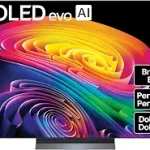
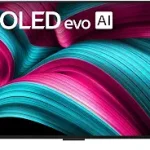
LG 42-Inch Class OLED evo AI 4K C5 Series Smart TV w/Dolby Atmos, Dolby Vision, HDR10, AI Super Upscaling 4K, Filmmaker Mode, Wow Orchestra, Alexa Built-in (OLED42C5PUA, 2025)
LG 42-Inch Class OLED evo AI 4K C5 Series Smart TV w/Dolby Atmos, Dolby Vision, HDR10, AI Super Upscaling 4K, Filmmaker Mode, Wow Orchestra, Alexa Built-in (OLED42C5PUA, 2025) (ASIN B0FBXXV8ZJ)
Best for a higher listed refresh rate
Samsung 65-Inch Class S90H Series, OLED, 4K, Smart TV, 2026 Model
Sony 65 Inch BRAVIA 6 OLED 4K HDR Smart Google TV with Gemini (K-65A60) (ASIN B0HB8PKJG4)
Best Oled Tv Buying Guide — Black Friday Deals 2026
An OLED shortlist can look deceptively simple until room size, connected equipment, preferred picture formats, and the exact model variant enter the decision. This guide compares three televisions with different practical draws: a compact LG with a named set of picture and sound features, a 65-inch Samsung with a higher listed refresh rate, and a 65-inch Sony whose listed HDR formats include Dolby Vision. For Black Friday, treat the offer as a reason to recheck the details, not as proof that a particular set is right for your room. Start with what you watch, what you connect, and which features matter enough to guide your choice.
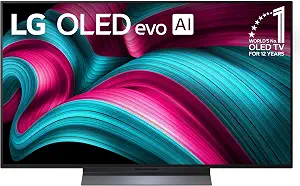
LG 42-Inch Class OLED evo AI 4K C5 Series Smart TV w/Dolby Atmos, Dolby Vision, HDR10, AI Super Upscaling 4K, Filmmaker Mode, Wow Orchestra, Alexa Built-in (OLED42C5PUA, 2025)
LG 42-Inch Class OLED evo AI 4K C5 Series Smart TV w/Dolby Atmos, Dolby Vision, HDR10, AI Super Upscaling 4K, Filmmaker Mode, Wow Orchestra, Alexa Built-in (OLED42C5PUA, 2025) (ASIN B0FBXXV8ZJ)
Best Overall is an editorial choice for this LG because its 42-inch size and clearly named feature set make it a flexible starting point for a buyer who wants a smaller OLED rather than a large living-room screen. Its 4K resolution is listed as 3840 x 2160, and the specifications include a 120 hertz refresh rate. The product name also calls out Dolby Vision, HDR10, Dolby Atmos, AI Super Upscaling 4K, Filmmaker Mode, Wow Orchestra, and Alexa built-in. Those details give shoppers several concrete items to compare against their own viewing habits instead of relying on a broad claim that one television suits everyone. For a desk-adjacent setup, bedroom, or room where a larger screen would be difficult to place, the 42-inch format is the most obvious planning advantage. Measure the intended furniture or wall area before deciding; a screen-size label does not tell you whether the complete installation will suit the spot.
The connection details are useful to consider before a Black Friday purchase: this model lists four HDMI ports and three USB ports. Make a short inventory of the devices you expect to connect, then compare it with the port counts and any other requirements those devices have. The listing names Filmmaker Mode and Dolby formats, so a viewer who cares about those labels can check that the exact variant in the offer carries them. The product name also includes Alexa built-in; treat that as a named feature to verify on the offer page rather than assuming that every similarly named model has the same package. The listed 0.1 milliseconds response time is another specific figure for shoppers who want to compare published specifications, although the figure alone cannot determine how the television will fit every use.
For Black Friday, the Best Overall label is a helpful shortlist cue, not a promise of superior performance or a market-wide award. Decide whether the compact size is genuinely useful, whether the named formats and modes align with your preferences, and whether the listed ports suit your equipment. Then compare the exact model identifier, OLED42C5PUA, with the variant shown in the offer. A reduced offer is only relevant if it is for the television and configuration you intend to buy. If your primary plan calls for a much larger screen, the LG’s 42-inch size may not be your preferred direction; if a more compact footprint and the named features meet your needs, it merits a closer look.
Key specs
Screen size
42 inches
Display type
OLED
Resolution
3840 x 2160
Refresh rate
120 hertz
Response time
0.1 milliseconds
HDMI ports
4
USB ports
3
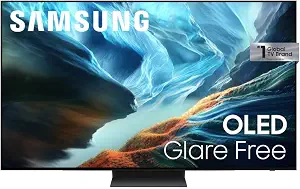
Samsung 65-Inch Class S90H Series, OLED, 4K, Smart TV, 2026 Model
Samsung 65-Inch Class S90H Series, OLED, 4K, Smart TV, 2026 Model (ASIN B0GPY4Y2VF)
Best for a higher listed refresh rate is the editorial label for this Samsung, whose listed rate is 165 hertz. That makes it a natural candidate for shoppers who put the published refresh-rate figure high on their comparison list, while the label does not establish measured superiority in use. The television is a 65-inch, 4K OLED model, so its screen size and resolution also make it a distinct option for someone planning a larger viewing area. Before committing to that size, consider the room, seating arrangement, and furniture or wall location. A product name or specification cannot decide whether a screen will feel appropriately scaled in your particular space; planning the placement is part of choosing the right variant.
The listed four HDMI ports give you a practical point of comparison if several devices are part of the setup. Write down the equipment you intend to attach and check the television’s offer details against the requirements for that equipment. The product listing identifies Tizen as its operating system. If that is a deciding detail for your household, make sure the offer is for this same model rather than assuming the information carries over to another Samsung television. The available facts identify a 2026 model, but they do not establish a particular sale price or promotion. During Black Friday, verify the actual offer and product identifier instead of treating seasonal wording as evidence of a deal.
This model’s Best for a higher listed refresh rate label points to one specific reason it may belong on your shortlist; it is not a claim that every viewer needs the higher figure. Compare that detail with your own priorities rather than treating a single specification as a universal tie-breaker. Its 65-inch screen is a meaningful choice to make alongside the refresh-rate question: a buyer focused on a compact room may prefer to investigate the LG instead, while someone planning around a larger screen may want to compare the Samsung and Sony closely. For a Black Friday decision, confirm the S90H model name, the screen size, the stated 4K resolution, the 165 hertz listing, and the operating-system detail on the exact offer. That simple check helps keep a good-looking headline from distracting you from the configuration you actually want.
Key specs
Display
Display Technology OLED
Resolution
Resolution 4K
Refresh rate
Refresh Rate 165 hertz
Screen size
Screen Size 65 inches
HDMI ports
Total Number of HDMI Ports 4
Operating system
System Operating System Tizen
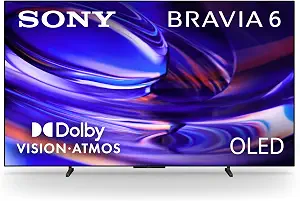
Sony 65 Inch BRAVIA 6 OLED 4K HDR Smart Google TV with Gemini (K-65A60)
Sony 65 Inch BRAVIA 6 OLED 4K HDR Smart Google TV with Gemini (K-65A60) (ASIN B0HB8PKJG4)
Best for Dolby Vision format support is the editorial label for this Sony because its listed HDR formats include Dolby Vision, HDR10, and HLG. Shoppers who specifically want to see Dolby Vision named in the television’s supported formats have a direct reason to consider it. The set is a 65-inch OLED with 4K resolution and a listed 120 hertz refresh rate. Those facts make it straightforward to compare with the Samsung’s published refresh-rate figure while keeping the format question separate from the size and rate questions. The label does not claim a tested picture advantage; it identifies a feature stated in the available product details. Check the content and equipment you use, then decide whether format support is important enough to shape your shortlist.
The Sony lists four HDMI ports, and its VESA mount standard is 400 x 200 mm. Those details can help you plan connections and installation. Count the devices you expect to connect, and check the mounting information against the bracket or installation plan you have in mind before buying. The product name identifies the set as a BRAVIA 6 OLED 4K HDR Smart Google TV with Gemini, model K-65A60. Keep that exact model identity in view when comparing a Black Friday offer: similar names are not enough to confirm that an offer refers to the same television. The supplied details do not specify a price, promotion, or installation package, so those points need to be checked on the offer itself.
The Best for Dolby Vision format support distinction is most useful when a shopper already knows that named HDR formats matter to their decision. It should not crowd out practical questions such as whether the 65-inch size suits the room, whether the listed HDMI connections fit the setup, or whether the mounting standard matches the planned installation. If you are comparing this Sony with the Samsung, note that both are listed as 65-inch 4K OLED televisions, while the Sony’s provided details name Dolby Vision, HDR10, and HLG and list a 120 hertz refresh rate. Compare those facts with the features you value rather than assuming that one headline settles every consideration. During Black Friday, verify the precise K-65A60 variant and the terms of the offer before making the final choice.
Key specs
Display
Display Technology OLED
Resolution
Resolution 4K
Refresh rate
Refresh Rate 120 hertz
HDR formats
HDR Format Supported Dolby Vision, HDR10, HLG
HDMI ports
Total Number of HDMI Ports 4
VESA mount
VESA Mount Standard 400 x 200 mm
Start with the room and the viewing plan
The most useful first question is not which television has the most prominent headline; it is where the screen will go and how you expect to use that space. In this selection, the LG is listed at 42 inches, while the Samsung and Sony are each listed at 65 inches. Think through the viewing position, furniture layout, and whether the television will sit on a stand or be mounted. If you are replacing an existing set, measure the available location and compare it with the screen size you are considering. That gives you a practical way to decide whether the compact LG or one of the larger models deserves attention before you compare additional details.
Use Black Friday browsing to revisit the fit question rather than letting an offer headline dictate the screen size. A lower-priced listing, if one appears, does not make a television suitable for a room where it cannot be placed comfortably. Nor should the largest listed screen automatically win if your plan calls for something more compact. Keep the intended room and use in view, then shortlist the models that make sense there. Only after that should you weigh details such as ports, listed refresh rate, named HDR formats, or operating system. This order keeps the comparison grounded in the decision you will live with every day.
Decide which picture details deserve priority
All three models are identified as OLED televisions, and each has 4K resolution in the supplied information. Beyond that shared starting point, compare only the distinctions that affect your own shortlist. The Samsung lists a 165 hertz refresh rate; the LG lists 120 hertz and a 0.1 milliseconds response time; the Sony lists 120 hertz. These are published specifications, not a complete account of how a television will suit every kind of viewing. If refresh-rate figures matter to you, keep the listed value attached to the exact model and compare it with your intended use rather than assuming that the largest number automatically answers every question.
HDR labels can offer a more specific way to narrow the choices. The Sony lists Dolby Vision, HDR10, and HLG, while Dolby Vision and HDR10 are named in the LG product title. If a format is important to you, check for that exact name in the details of the variant being offered. Black Friday pages can put promotional language in front of the specifications, so pause to confirm that the format you care about belongs to the model in your cart. The goal is a shortlist based on your priorities, not a sweep through every technical term or an assumption that one listed feature makes a television the right choice for all households.
Map the connections before choosing a set
A little connection planning can prevent a last-minute change of mind. The LG, Samsung, and Sony each list four HDMI ports; the LG also lists three USB ports. Make a simple inventory of the devices you plan to connect, including anything you may add later, and compare the relevant port details with the exact television listing. This is a practical check, not a claim that a particular arrangement will suit every device. If you need a specific connection or setup detail that is not included in the provided product information, verify it on the full offer page before deciding.
Installation deserves the same attention as connectivity. The Sony lists a VESA mount standard of 400 x 200 mm, which gives wall-mount planners a specific detail to compare with their installation plan. Confirm the standard shown for the television and the requirements of the mounting arrangement you intend to use. For the other models, do not infer a mounting detail from what is missing here; look it up for the exact variant if it matters to your plan. At Black Friday, a quick equipment and installation checklist is more useful than relying on a broad product title to answer questions it does not address.
Choose named features that match your routine
A feature list becomes useful when it connects to something you actually value. The LG product name calls out Filmmaker Mode, Dolby Atmos, Wow Orchestra, AI Super Upscaling 4K, and Alexa built-in, alongside Dolby Vision and HDR10. The Samsung listing identifies Tizen as its operating system, and the Sony product name identifies Google TV with Gemini. Treat these as named details to compare, not as a reason to assume that every model has the same functions or that a label guarantees a particular experience. If a feature will influence your purchase, verify that it appears for the exact product variant you are considering.
Think about the people who will use the television and the choices they make most often. A named mode or operating system may matter to one household and be incidental to another; the available facts do not say which will be more convenient for you. Write down the features you care about before opening multiple Black Friday listings. That makes it easier to distinguish a relevant detail from a long list of unfamiliar labels. For any capability that is not explicitly stated in the product information, consult the complete listing rather than filling in the gap by assumption. A focused comparison is more useful than trying to rank every feature on a page.
Make the offer and model identity line up
Seasonal wording is not a substitute for checking what is actually being offered. Compare the model name and identifier, screen size, display type, resolution, and the particular features you care about. The LG identifier is OLED42C5PUA; the Samsung is identified as an S90H 2026 model; and the Sony model is K-65A60. Keep those identities attached to your notes as you move between listings. If an offer page uses a shortened title or presents several variants, confirm that its selected option is the one you intended. Do not assume that a deal label establishes the product’s specifications or the terms of the offer.
For Black Friday, compare the exact offer details available when you shop and decide whether they meet your own budget and requirements; no price or discount is established in this guide. Check that the product in the cart matches the model and configuration you evaluated, then review any offer conditions shown on the listing. If an important question remains unanswered, pause and seek the relevant detail before purchase rather than guessing from a neighboring model’s information. A deliberate final check can keep seasonal urgency from turning a useful shortlist into a mismatched order.
Make your Black Friday choice
The right choice here depends on fit and priorities: the LG offers a compact 42-inch option with a range of named features, the Samsung stands out for its listed 165 hertz refresh rate, and the Sony names Dolby Vision, HDR10, and HLG support. Those are useful distinctions, not universal verdicts. Before a Black Friday purchase, confirm the exact model, screen size, connections, and any feature that matters to you against the offer in front of you. Choose the television that suits your room and setup, and let the offer support that decision rather than replace it.