HP OmniBook 3, 17.3″ FHD IPS Business Laptop (ASIN B0H1G6JWCH)
Best Online Laptop Buying Guide — Black Friday Deals 2026
Shopping for an online laptop during Black Friday can mean weighing very different kinds of computers, not simply looking for the biggest specification. These three listings range from a Chrome OS model with a 14-inch screen to Windows laptops with larger displays and different memory and storage configurations. Start with the programs and routines the computer needs to support, then compare the details that matter for those tasks. The Best Overall and Best Budget labels here are editorial picks among these featured models, not results from testing or claims about every laptop on the market. Treat any Black Friday offer as a specific configuration to verify: a familiar product name alone does not establish that the listed screen, memory, storage, or operating system matches your needs.
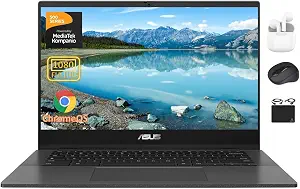
ASUS Chromebook Laptop Student Business 2024 (ASIN B0DFDWN8RT)
The ASUS Chromebook Laptop Student Business 2024 is the Best Budget pick among these three listings. That label reflects its straightforward Chrome OS configuration and the listed essentials, not a measured performance advantage or a promise about its Black Friday price. It has an 8-Core MediaTek Kompanio 520 processor, 4GB RAM, and 128GB of storage described as 64GB eMMC plus a 64GB card. Those details are worth reading together: consider how much memory your intended work needs, and note exactly how the listing describes the two storage components rather than treating the total as a single type of storage.
Its 14-inch FHD Anti-Glare Display has a resolution of 1920 x 1080 pixels. That gives shoppers a clear screen-size and resolution description to compare with their own usual tasks, such as reading documents, viewing web pages, or keeping a video call visible. The anti-glare wording is part of the supplied display specification; it is not a substitute for considering where and how you will use the laptop. Chrome OS is the operating system, so think about whether it fits the applications and workflow you expect before choosing it over either Windows model.
The listing specifies up to 15-hour battery life, Wi-Fi 6 and Bluetooth 5.3 combo connectivity, and an integrated privacy shutter for the webcam. The battery figure is qualified as “up to,” so treat it as a listed claim rather than a guarantee of your own runtime. The shutter may be a relevant detail if you want a physical way to cover the webcam when it is not in use. Together, these features give a shopper several practical points to check against a daily routine without assuming anything about unlisted ports or other equipment.
For a Black Friday comparison, verify that the offer is for this ASUS Chromebook and that the storage description still reads 64GB eMMC plus a 64GB card. A lower-looking offer is not useful if it represents a configuration you did not intend to buy. This model may suit a shopper seeking a Chrome OS laptop with a full-HD 14-inch display and a listed long-lasting battery claim, provided its memory, storage arrangement, and operating system align with their priorities. Compare those facts with the Dell and HP listings rather than assuming that the Best Budget label settles the choice.
Key specs
Display
14″ FHD Anti-Glare Display
Resolution
1920 x 1080 pixels
Processor
8-Core MediaTek Kompanio 520
Memory
4GB RAM
Storage
128GB (64GB eMMC+64GB Card)
Operating system
Chrome OS
Battery
up to 15-hour battery life
Webcam privacy
integrated privacy shutter
Wireless connectivity
Wi-Fi 6 and Bluetooth 5.3 combo
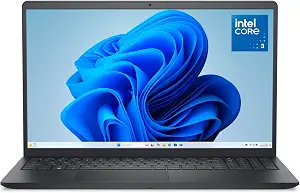
Dell 15.6 Laptop, FHD, Intel Core 3 100U, 8GB RAM, Windows 11 Home
Dell 15.6 Laptop, FHD, Intel Core 3 100U, 8GB RAM, Windows 11 Home (ASIN B0H5X2GC1Y)
The Dell 15.6 Laptop is the Best Overall choice in this group. This is an editorial designation for the configuration presented here, not a claim that it outperforms other laptops or was measured against them. The listed combination is a 15.6-inch display with 1920 x 1080 pixel resolution, an Intel Core 3 100U processor, 8 GB of memory, and 512 GB of storage. Windows 11 Home is the operating system. For shoppers looking at an online laptop for a general Windows setup, these are the central details to compare with the programs, screen space, and file capacity they expect to use.
The screen specification gives a larger listed diagonal than the ASUS model, while retaining the same stated resolution. That distinction may help if you prefer a roomier viewing area for documents or several visible items, but screen size alone cannot tell you whether a particular laptop fits your desk, bag, or routine. The Dell weighs 3.6 pounds, a concrete figure to consider if you expect to carry it. Think about both the display and weight in the context of your own travel and workspace instead of treating either number as a universal advantage.
The listing also gives a 41 watt-hour battery capacity and Wi-Fi 6 connectivity. Battery capacity is not the same specification as a stated runtime, so it should not be translated into hours of use. If cordless use is important, note that the provided facts do not state a battery-life estimate; compare the listing details available at purchase time and decide whether they give you enough information. The wireless specification may matter when checking the connectivity details you need, while the Windows 11 Home designation helps establish which operating system this particular configuration uses.
During Black Friday, check the exact Dell configuration shown in the offer: the processor, 8 GB memory, 512 GB storage, display resolution, and Windows 11 Home should correspond to the model you mean to compare. The Best Overall label is a useful starting point within this article, but it does not replace matching those specifications to your needs. This laptop is a reasonable shortlist candidate if a 15.6-inch FHD Windows system, the stated memory and storage, and its 3.6-pound weight fit your plans. Compare its battery information carefully with the ASUS model’s qualified runtime claim and the HP’s different screen and processor configuration.
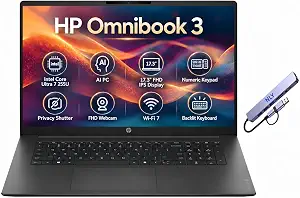
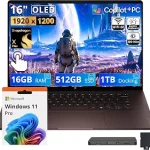
HP OmniBook 3, 17.3″ FHD IPS Business Laptop (ASIN B0H1G6JWCH)
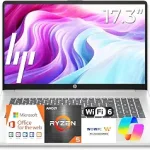
The HP OmniBook 3 is the Best for a Large-Screen Windows Setup pick, based on its listed 17.3-inch display and Windows 11 Pro operating system. The label describes a potentially useful fit for someone who values a larger screen in a Windows configuration; it does not claim measured superiority. The display is specified as FHD IPS LED with 1920 x 1080 high resolution. If your routine involves keeping substantial content visible, compare that screen size with the physical space where you plan to use the computer and with the smaller displays in the other two listings.
This configuration pairs a 12-Core Intel Core Ultra 7 255U processor with 16GB RAM and a 512GB SSD. Those are useful points of comparison when deciding whether the listed setup fits your intended applications and file needs. They should not be treated as proof of a particular speed or workload result, since no such results are provided. The operating system is Windows 11 Pro, a distinction to notice if you are comparing it with the Dell’s Windows 11 Home or the ASUS Chromebook’s Chrome OS. Choose based on the software environment and system configuration that make sense for your own use.
The HP’s listed ports are 2 x USB-C 3.1, 2 x USB-A 3.0, and 1 x HDMI 2.1. Its backlit keyboard and numeric keypad may be useful details for shoppers who type in varied lighting or regularly enter numbers. Wireless specifications are Wi-Fi 7 and Bluetooth 6.0. These facts make a concrete checklist for checking the devices and connections you plan to use; they do not establish compatibility with a particular accessory unless that is confirmed separately. The broad display and the port selection may be more relevant to one shopper than the storage or operating-system differences, so prioritize according to actual tasks.
For Black Friday, verify that the product offer identifies the HP OmniBook 3 configuration with the 17.3-inch FHD IPS display, 16GB RAM, 512GB SSD, and Windows 11 Pro. Confirming the exact version is more useful than relying on a product family name or the Best for label alone. Consider whether the large display and numeric keypad suit your setup, and whether the listed ports and wireless standards match what you need to connect. If portability matters, do not assume a weight from the screen size: no weight is included in the facts here. Compare what is provided, and look for any additional information you personally need before deciding.
Key specs
Processor
12-Core Intel Core Ultra 7 255U
Memory and storage
16GB RAM 512GB SSD
Display
17.3 inch FHD IPS LED display with 1920 x 1080 high resolution screen
Operating system
Windows 11 Pro
Ports
2 x USB-C 3.1, 2 x USB-A 3.0, 1 x HDMI 2.1
Keyboard
Backlit Keyboard; Numeric Keypad
Wireless connectivity
Wi-Fi 7; Bluetooth 6.0
Choose the software environment that fits your routine
An online laptop comparison gets clearer when you begin with the operating system rather than a sale badge. The ASUS uses Chrome OS, while the Dell lists Windows 11 Home and the HP lists Windows 11 Pro. Those are meaningful distinctions, but the supplied specifications do not describe particular applications or guarantee compatibility. Make a list of the software and work processes you expect to use, then confirm that the system you select supports them. If you already organize files or work around a particular operating system, that preference may matter more than an unrelated difference in screen size.
The two Windows listings are not identical: Home appears on the Dell and Pro on the HP. Do not assume the labels are interchangeable or that one provides a specific benefit for your use without checking your requirements. Similarly, do not dismiss Chrome OS just because it is different; decide whether it suits your intended tasks. Black Friday can draw attention toward the offer first, but your operating-system choice should come before judging whether a deal is appealing. A price comparison only helps after you know which kind of computer you are actually considering.
Decide how much screen you want in your workspace
The display sizes create an easy first comparison: the ASUS is listed with a 14-inch FHD Anti-Glare Display, the Dell with a 15.6-inch display, and the HP with a 17.3-inch FHD IPS LED display. Each product record specifies a resolution of 1920 x 1080 pixels, though the ASUS and HP descriptions explicitly call out FHD. Consider whether you mainly view one document, switch among several windows, or need a display that is comfortable in the space where you will work. These are questions about your routine, not evidence that one screen is best for everyone.
Think about where the laptop will sit and how often you will move it. The Dell’s listed weight is 3.6 pounds, but the records do not provide weights for the other two models, so avoid guessing at a comparison. Black Friday listings may show product images or configuration details; check the precise screen specification rather than inferring size from a photo. A larger display may be appealing for a fixed workspace, while a shopper with limited room may value a different balance. Let the listed dimensions and your intended setting guide the choice.
Match memory and file capacity to what you keep
Memory and storage are separate considerations. The ASUS lists 4GB RAM and 128GB described as 64GB eMMC plus a 64GB card. The Dell lists 8 GB memory and 512 GB storage. The HP lists 16GB RAM and a 512GB SSD. Read the wording closely: the ASUS explicitly divides its storage description into two components, while the HP identifies an SSD. The Dell listing states its storage capacity without specifying a storage type in the facts provided. Preserve those distinctions when comparing configurations rather than assuming that matching capacity means matching hardware.
Consider your own files and the applications you expect to use, and check whether the configuration gives you the memory and storage you want. These specifications alone do not establish how a laptop performs with a particular workload or how much space you personally will need. During Black Friday, compare the exact variant attached to the offer, especially if nearby options have different memory or storage. A familiar model name is not enough to confirm that the deal is for the configuration you selected. Use the product details as a checklist and make the decision around your actual needs.
Use connectivity and power details as a practical checklist
The wireless details differ across these listings. The ASUS specifies Wi-Fi 6 and Bluetooth 5.3 combo, the Dell specifies Wi-Fi 6, and the HP lists Wi-Fi 7 and Bluetooth 6.0. If wireless standards matter to your setup, compare these exact descriptions with the network and accessories you plan to use; the facts do not establish performance in a particular environment. The HP also lists 2 x USB-C 3.1, 2 x USB-A 3.0, and 1 x HDMI 2.1, while the other product records do not provide port details. Missing information here is not proof that a laptop lacks a particular connection.
Battery information deserves similar care. The ASUS listing says up to 15-hour battery life, with the qualification “up to.” The Dell provides a 41 watt-hour battery capacity, which is not a stated runtime. No battery specification is supplied for the HP in these facts. Avoid turning these different forms of information into a direct hours-based comparison. If working away from a power source is important, seek enough listing detail to make an informed decision and distinguish an advertised maximum from a capacity figure.
Black Friday: check the exact configuration before comparing offers
A Black Friday offer is worth evaluating only after you confirm which configuration it covers. Check the product name and the details that matter most to you: operating system, display, processor, memory, and storage. For example, the ASUS description includes Chrome OS and a split storage arrangement; the Dell lists Windows 11 Home and 512 GB of storage; the HP specifies Windows 11 Pro and a 512GB SSD. Those differences can affect which listing belongs in your comparison, even before you consider any displayed offer.
Compare like with like and do not infer a discount, stock status, or included item from a headline. The product information provided here does not establish current prices or active promotions. On the offer page, confirm that the selected variant matches the configuration you intended to consider, and review the details shown for that particular listing. If an essential fact is unclear, treat that uncertainty as a reason to investigate rather than filling in the gap yourself. Black Friday is a useful time to compare options, not a reason to skip careful checking.
Make your Black Friday choice
The right online laptop for Black Friday depends on which listed features solve a real need. Consider the ASUS if Chrome OS, a 14-inch FHD anti-glare screen, and its stated battery-life claim fit your priorities; consider the Dell if its Windows 11 Home configuration and 15.6-inch screen make sense for your plans; and look to the HP if you want the listed 17.3-inch Windows 11 Pro setup. These are distinct configurations, not interchangeable offers. Before choosing, check the exact variant and weigh its operating system, screen, memory, storage, connectivity, and any power information that matters to you. A careful comparison is more useful than a Black Friday label by itself.